 How-to
7 Ways to Listen to Real Pilot Talk Online
Quick Summary
To listen to real pilot talk, you're really hearing radio traffic between pilots and air traffic control, not crew conversations. Free live ATC feeds, YouTube streams and apps let you hear it, and tower, ground and approach frequencies are the most common starting points.
- Online audio is radio traffic between pilots and air traffic control, not private crew chatter.
- Listen for the call sign, the verb such as cleared or climb, and the number to follow along.
- Readbacks, where pilots repeat instructions, are the most useful thing to listen for as a beginner.
- Streamed audio usually lags real time, while a physical scanner receives signals almost instantly.
- Listening is fine, but never transmit on an aviation frequency and check local rules before republishing audio.
Table of Contents
- What You're Actually Hearing When You Listen to Real Pilot Talk
- How to Listen to ATC Online: Finding a Live Feed Step by Step
- Listen to Real Pilot Talk Online Free: Websites That Don't Charge a Dime
- Listen to Real Pilot Talk YouTube: Videos, Streams and What to Look For
- Listen to Real Pilot Talk App: Phone Options and Trade-Offs
- Following One Flight Across Handoffs Without Getting Lost
- Feed Delays, Coverage Gaps and Whether Scanners Beat Streams
- Your Next Step: Pick One Airport and Listen for Twenty Minutes
- Frequently Asked Questions
Some of you have probably caught yourself at the gate, phone out, typing "listen to real pilot talk" just to hear what the cockpit sounds like when the mic is hot. We get it. Two flight attendants with a combined 89,000 hours in the air, and we still find ourselves tuning into controller chatter on a slow Tuesday. That's the appeal of Cabin Pressure with Shawn & G in a nutshell: we've been in the cabin for decades, and we still think the view from the other side of the cockpit door is pretty fascinating.
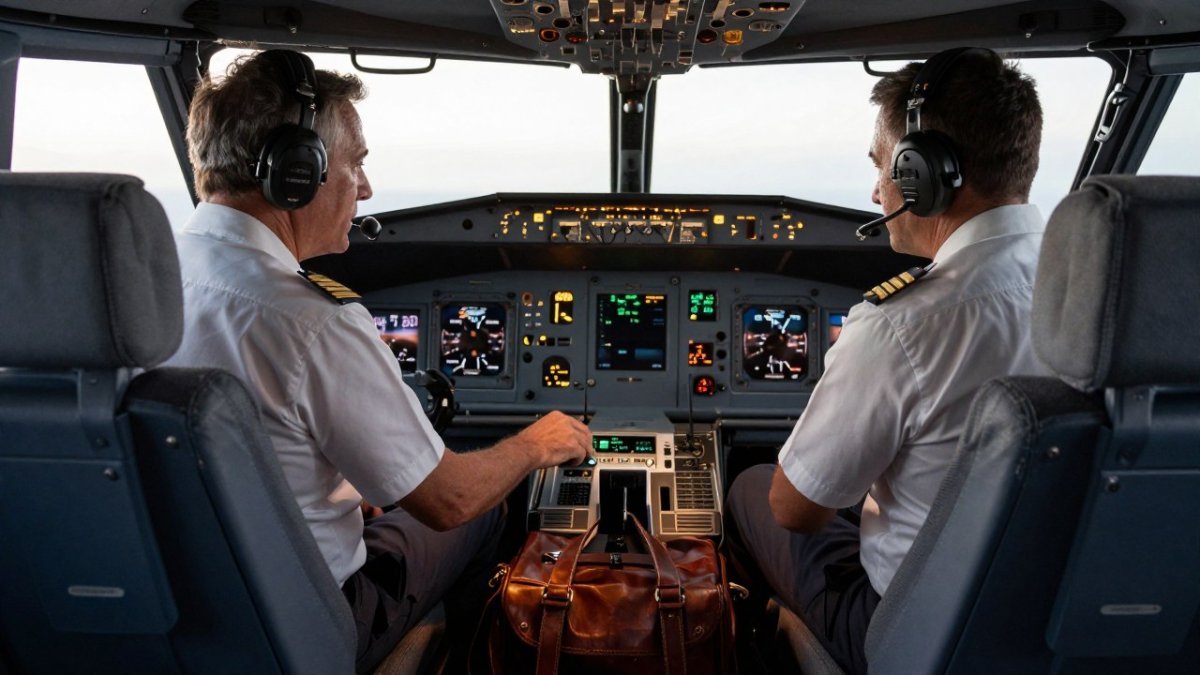
Here's the catch. The cockpit doesn't broadcast itself. To hear what a working pilot's career actually sounds like, meet John on the show. What you can hear online is the radio traffic between pilots and air traffic control (ATC), relayed through public frequencies. For what crews keep to themselves, read behind-the-scenes airline secrets. That's a different thing from the crew chatting over coffee, and knowing the difference will save you a lot of confusion.
What You're Actually Hearing When You Listen to Real Pilot Talk
When people search for "listen to real pilot talk," they usually expect a crew conversation. What they get is radio communication: short, clipped, very formal exchanges between a pilot and a controller. "Cleared for takeoff." "Contact departure, good day." It sounds like a foreign language at first, and honestly, a lot of it is.
ATC communications follow standard phraseology, which is the fixed vocabulary aviation uses so there's no room for misunderstanding. Here are the facility types you'll hear referenced constantly:
- Tower: the controllers who handle takeoffs and landings at one airport
- Ground: the controllers who direct aircraft taxiing on the ground
- Approach and departure: controllers guiding planes in and out of the airport's airspace
- Center: the controllers handling aircraft between airports at cruising altitude
Those four tell you where in the flight you are. The next layer is who is talking and what they're saying. That's where most beginners get lost, so let's decode it.
Call signs. Every flight has a radio name. Airliners usually use the airline name plus a flight number, "United 432," "Delta 1187." General aviation often uses the aircraft's registration, like "November 1234 Alpha." When you hear a call sign, that's the aircraft being addressed or speaking. If you want to follow one plane, that call sign is your thread.
Clearances and instructions. A controller issues an instruction, "Turn left heading 270," "Climb and maintain flight level 350," "Cleared to land runway 27." Headings are in degrees, altitudes in feet or flight levels (flight level 350 means roughly 35,000 feet), and runways by number.
Readbacks. The pilot repeats the instruction back so the controller knows it was heard correctly. This is the single most useful thing to listen for as a beginner.
Frequency changes. "Contact departure on 124.35" means the pilot is switching to a new radio frequency. That handoff is your cue that the flight is moving to a different phase, and, if you're following along online, to a different feed.
The rhythm. Controllers speak fast because they're managing many aircraft. Pilots respond fast because they're busy. Don't try to catch every word. Listen for the call sign, the verb (cleared, climb, descend, turn, contact), and the number.
How to Listen to ATC Online: Finding a Live Feed Step by Step
Most online audio comes from live feeds tied to specific airports or control facilities. Here's the basic process:

- Pick a search tool or website that lists live ATC feeds.
- Search by airport code, city, or facility name. Major airports usually have several feeds.
- Choose the frequency you want: ground, tower, approach, or center.
- Press play and give it a minute. Radio traffic comes in bursts, so silence is normal.
Quick tip from the crew side: start with a busy airport during a peak hour. You'll hear more transmissions and pick up the rhythm faster.
Listen to Real Pilot Talk Online Free: Websites That Don't Charge a Dime
Plenty of sites stream public ATC audio for free, which is a good thing since public frequencies are, well, public. Free options generally work well for casual listening, though quality and availability vary. Look for sites that clearly list which feed you're on and when it was last active.
Keep your expectations realistic. Free feeds sometimes cut out, and the audio can be a little rough. For a beginner, that's part of the charm.
Listen to Real Pilot Talk YouTube: Videos, Streams and What to Look For
YouTube has a surprising amount of live and recorded ATC audio, often paired with a map or a radar display. Those videos are great for learning, because the visuals help you connect a voice to an aircraft's position.
When you're scanning videos, check three things:
- Is the audio live or a recording from a past date?
- Does the description name the airport and frequency?
- Is the creator explaining what's happening, or just dropping a feed with no context?
The better channels do the explaining for you, which is exactly what a newcomer needs.
Listen to Real Pilot Talk App: Phone Options and Trade-Offs
Mobile apps make listening easy from the gate or the couch. Most let you save favorite feeds and switch quickly between airports. The trade-off is that app feeds depend on the same public sources, so you're still subject to delays and coverage gaps. And if you're on a flight with spotty Wi-Fi, don't count on live streaming to hold up.
Phones are convenient. They're just not always the most reliable option.
Following One Flight Across Handoffs Without Getting Lost
Here's an angle worth knowing. Aircraft don't stay on one frequency. A flight gets handed from ground to tower to departure to center, and then down again on approach. If you want to follow one specific plane, you need to track its call sign (the flight's radio name, like "United 432") and switch feeds as it moves.
Start by noting the flight number and departure airport. Listen on the ground frequency first, then tower, then departure. Each handoff sounds like a new voice saying the same flight's name. Once you catch the pattern, you'll feel like a real aviation nerd, and we're proud of you. For crew-side stories about what these handoffs look like from inside the plane, explore our episodes.
Feed Delays, Coverage Gaps and Whether Scanners Beat Streams
Online streams are convenient, but they carry real limits, and knowing them up front saves you from thinking a feed is broken when it isn't.
Delay. Streamed audio usually lags behind real time, sometimes by a noticeable margin depending on the feed. That matters if you're trying to sync what you hear with a flight you're watching out the window or on a tracking app. A physical scanner receives the radio signal directly, so it's essentially real time.
Coverage. A feed only exists where someone has set up a receiver and shared it. Busy hubs usually have several feeds; smaller airports and remote center sectors may have none. Even where a feed exists, it may cover only one frequency, tower but not ground, or approach but not center.
Reliability. Free feeds can drop, go quiet, or come back under a different listing. Audio quality varies with the receiver and the connection. None of this is a knock on the people running the feeds; it's just the nature of volunteer-relayed audio.
Stream vs. scanner: a practical decision guide.
- Choose an online stream or app if you want to listen from anywhere, don't want to buy equipment, and can live with some delay and coverage limits. For casual listening, this is plenty.
- Choose a physical scanner if you want near-real-time audio, are listening in one location, and don't mind the setup. The catch is that a scanner only hears what's within range of your antenna, so it's a local tool, not a travel one.
Watch out: public reception does not automatically mean unrestricted rebroadcast or reuse. Listening passively is one thing; recording, re-streaming, or republishing audio is another, and the rules differ by jurisdiction. Likewise, listening is not transmitting, never key up on an aviation frequency, and don't share anything that could interfere with operations. Rules vary, so check your local regulations before you do anything beyond listening.
For most people reading this, a free online feed is the right starting point. If you fall down the rabbit hole and want real-time local audio, a scanner is the next step, just keep it legal and low-key, the same way we keep the cabin calm when the seatbelt sign dings.
Before you decide between a stream and a scanner, here is how the two options compare on the points the article covers.
| Option | Best for | Key difference |
|---|---|---|
| Online stream or app | Listening from anywhere without buying equipment | Streamed audio usually lags real time |
| Physical scanner | Near-real-time audio in one fixed location | Only hears what's within range of your antenna |
| Free public feed | Casual listening with no setup | Can drop, go quiet, or change listing |
| Busy hub airport | Finding several feeds to choose from | Usually has multiple feeds available |
| Smaller airport or remote sector | Only if a feed happens to exist | Often has no feed, a coverage gap |
Your Next Step: Pick One Airport and Listen for Twenty Minutes
Our challenge to you: pick one busy airport, choose the tower frequency, and listen for twenty minutes. Don't worry about understanding everything. Just notice the rhythm, the readbacks, and how calm everyone sounds even when traffic is heavy.
And if you want the human side of the sky to go with the radio chatter, come hang out with us. Listen to Cabin Pressure with Shawn & G, catch new episodes every Monday, or check out our Travel Gear We Use page for the gear we actually carry on the road. What's the first airport you're going to tune in to? Tell us in the comments.
Frequently Asked Questions
Is there a way to listen to live air traffic control?
Yes. Several websites and mobile apps stream live audio from airport towers, approach controllers and air route centers, usually from public frequencies. You pick an airport or facility from a list, press play and listen. Most feeds run a few seconds to a minute behind real time, and some airports have no feed at all, so coverage varies. Start with a large hub you know, since busy airports tend to have more reliable streams.
Can you legally listen to air traffic control?
In most places, listening to publicly broadcast air traffic control audio on unencrypted frequencies is legal, and many services stream it openly. Rules differ by country, though, and some jurisdictions restrict how recordings are shared or used. Listen for your own interest, don't rebroadcast or interfere with communications, and check your local regulations if you plan to publish or record what you hear.
What do pilots and controllers actually say to each other?
Most of it is standard phraseology: call signs, altitude and heading instructions, taxi routes, and readbacks where the pilot repeats the instruction back to confirm it. Once you learn a few common phrases, the chatter becomes far easier to follow. A beginner-friendly tip is to focus on one aircraft's call sign and track its clearances from departure to arrival, which makes the conversation feel like a story rather than noise.
Can I listen to live ATC on YouTube or in an app?
Yes, both work. YouTube hosts many live-stream channels that carry airport feeds, often with a map or flight information on screen, and some apps offer searchable feed lists with more control over which frequency you hear. Apps tend to be better for switching between airports quickly, while YouTube is convenient if you just want something playing in the background. Either way, expect some delay and occasional dead air.