 How-to
How to Decompress After Flying: A Flight Attendant's Guide
Last Updated: November 14, 2026
Quick Summary
To decompress after flying, start with your ears by swallowing, chewing gum, or gently doing the Valsalva maneuver during descent. Then rehydrate with water, eat something light, and move your body. Finally, quiet your senses and settle into a regular local bedtime to help your body reset.
- Start ear-clearing early, during descent, using swallowing, gum, or hard candy.
- Drink a full glass of water within the first hour after landing.
- Get moving soon after landing with neck rolls, hip stretches, and a slow walk.
- Get outside in daylight within an hour or two if you land in the morning.
- Keep the room dim and skip the nightcap to sleep better your first night.
Table of Contents
- Why You Feel Wrecked Even After a Short Flight
- Step 1: Deal With Your Ears First
- Step 2: Get Your Gut Back on Track
- Step 3: Rehydrate and Refuel the Smart Way
- Step 4: Move Your Body and Reset Your Circadian Clock
- Step 5: Build a Post-Flight Relaxation Routine
- Your Next Flight Starts With This Routine
- Frequently Asked Questions
Why You Feel Wrecked Even After a Short Flight
Ever landed after what felt like a quick hop and still felt like you'd been run over by a catering cart?
That combination adds up fast. Your body deals with the pressure changes, the dehydration, and the stress of getting from gate to gate, and all of it lands at once when you finally sit down.
Below, we'll cover five steps to decompress after flying: fixing your ears, settling your stomach, rehydrating the right way, moving your body, and winding down. Let's do it in order instead.
Step 1: Deal With Your Ears First
Your ears are usually the first thing to complain, and they're often the easiest to fix. The middle ear is a small air-filled space, and the eustachian tube is the little passage that keeps its pressure balanced with the cabin. When the cabin pressure drops during descent, that tube has to open to let air in.
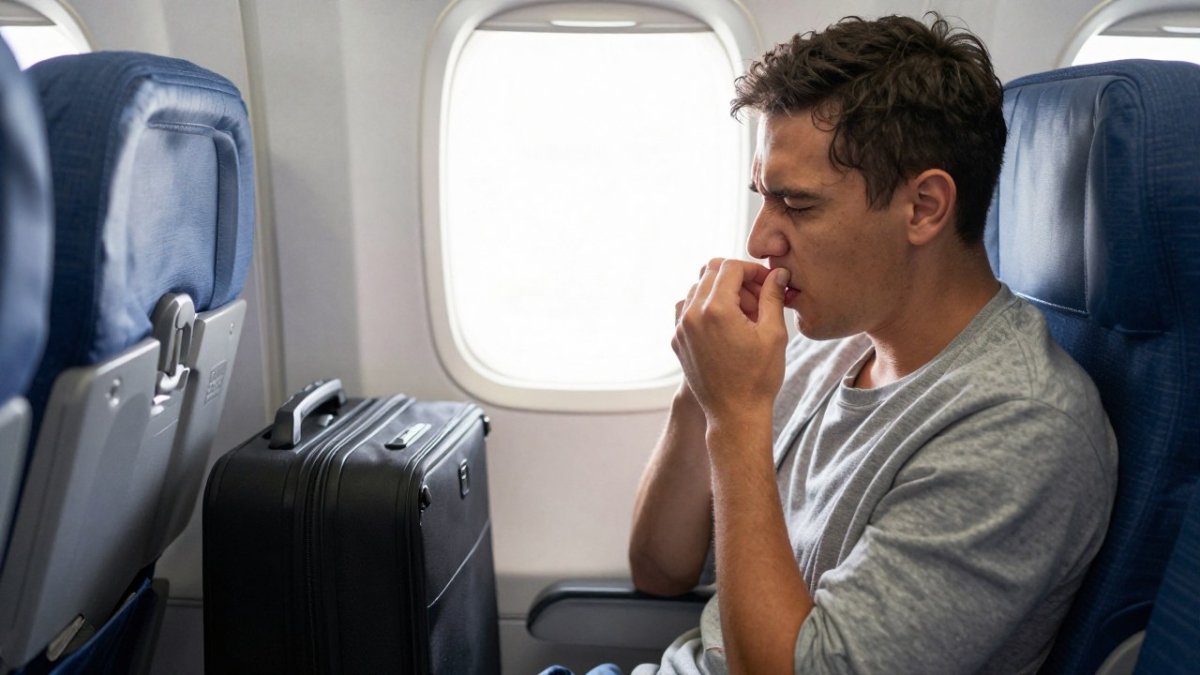
Rubbing your ears won't help. Gentle, steady methods work much better.
The Valsalva Maneuver and Other Pressure Fixes
The Valsalva maneuver is the classic move. Pinch your nose shut, close your mouth, and gently blow as if you're trying to puff out your cheeks. Stop if it hurts. Pushing too hard can cause more trouble than it solves.
Other easy options:
- Swallow repeatedly. Sips of water help the tube open naturally.
- Chew gum or suck on hard candy. It gets you swallowing without much effort.
- Yawn on purpose. Fake yawns work too, and they're surprisingly effective.
Start early, during descent, and keep at it.
How to Unclog Ears After Flying With a Cold
Flying with a cold is a different beast. Congestion makes the eustachian tube swell shut, and that's when ear pain gets serious. Nasal decongestant sprays can help, but read the label and don't use them longer than the directions say (the NHS). Overusing them can make congestion worse.
If your ear pain sticks around for more than a day or two after landing, or you notice drainage, fluid, or hearing changes, see a doctor. The official guidance on ear health from the NHS guide to earache and ear infections is a solid place to check what counts as a warning sign.
Step 2: Get Your Gut Back on Track
Here's the part nobody warns you about. Airplane food, skipped meals, and a lot of coffee can leave your stomach feeling bloated and off.
Start with something light and simple. Think plain crackers, a banana, toast, or a bowl of plain rice. Skip the heavy fried stuff and the giant pastry you grabbed at the terminal.
Go easy on carbonated drinks, too. Bubbles plus cabin air pressure is a recipe for bloating.
Step 3: Rehydrate and Refuel the Smart Way
Cabins run dry, and most people drink less than they should up there. The Cabin Pressure Stainless Steel Water Bottle is the kind of sturdy, insulated bottle that keeps water on hand through the airport and into your hotel room.
Food matters too. If you like to bring your own meals and drinks, the Travelpro FlightCrew5 Large Crew Cooler is the one flight attendants reach for to keep things cold on the road.
Quick checklist for the first few hours after landing:
- Drink a full glass of water within the first hour
- Eat something with protein and fiber
- Cut back on alcohol, which dehydrates you further
- Keep sipping water through the evening
Watch out: alcohol on a plane hits harder than it should. Two drinks at altitude can leave you feeling worse on landing, so pace yourself.
Here's a quick checklist of what to do in the first few hours after landing.
| Step | What to do | Timing |
|---|---|---|
| Hydrate | Drink a full glass of water | Within the first hour |
| Eat | Something with protein and fiber | After landing |
| Limit | Cut back on alcohol | Throughout the evening |
| Keep sipping | Continue drinking water | Through the evening |
Step 4: Move Your Body and Reset Your Circadian Clock
Sitting still for hours stiffens your legs, your back, and your neck. It also scrambles your internal clock, especially if you crossed time zones. Your circadian rhythm is the built-in cycle that tells your body when to sleep and wake, and light is the big signal that sets it.
Move First, Because Stiff Muscles Fight Sleep
Get moving as soon as you reasonably can. Walk the terminal instead of riding the people mover, take the stairs, or do a few stretches by the gate while you wait for your bag. Once you're settled, try some easy movements:
- Neck rolls and shoulder shrugs to release tension from the seat
- Hip flexor stretches to loosen up after sitting
- Calf raises and ankle circles to get blood moving out of your lower legs
- A slow walk around the block to get circulation going
Then Set Your Clock With Light, Not Willpower
Here's the part most travelers get backwards. You can't force your body onto a new time zone by deciding to be tired at 10 p.m. local time. You set the clock with light exposure, and the timing matters more than the amount.
- Landing in the morning at your destination: get outside in daylight within the first hour or two. Morning light is the strongest signal for pushing your clock forward. Keep the sunglasses off for a bit if you can stand it.
- Landing at night: keep lights dim, avoid bright overheads, and skip the urge to blast yourself with a screen. Bright light at the wrong hour tells your brain it's daytime and makes the jet lag worse.
- East versus west matters. Flying east (say, the US to Europe) usually means you'll want to advance your clock, so morning light and an early-ish bedtime help. Flying west (Europe to the US) tends to be easier for most people, and evening light helps you stay up to a normal local bedtime.
Sleep Hygiene for the First Night
The first night on the ground is where decompression is won or lost. A few habits that most road-warrior crew swear by:
- Pick a local bedtime and defend it. Even if you're not sleepy, go through the motions at a normal local hour. Lying down in the dark is not wasted time.
- Keep the room cool and dark. Blackout curtains and a cool room beat any supplement.
- Skip the nightcap. Alcohol helps you fall asleep and then wrecks the second half of the night. It's the most reliable way to feel worse at 3 a.m.
- Cap the nap. If you're desperate for a nap on arrival day, keep it short, most practitioners suggest under 30 minutes and not too late in the afternoon, so you don't blow your bedtime.
- Get up at a normal local hour the next morning even if the night was rough. One bad night beats a week of drifting.
Watch out: if you chase every wave of sleepiness with a nap and a coffee, you'll stay on home time for days. Pick a local schedule and stick to it, even when it's uncomfortable.
For more on keeping travel days manageable, including gear and routine ideas, check out our travel tips and the Travel Gear We Use page.
Step 5: Build a Post-Flight Relaxation Routine
Once your ears, stomach, hydration, and body are sorted, it's time to wind down. Flying leaves you keyed up from the noise, the crowds, and the constant low-grade alertness of travel. Decompressing after flying means deliberately turning that volume down, and the sensory part is the piece most guides skip.
Regulate Your Senses Before You Regulate Your Mood
You just spent hours in a metal tube with recycled air, engine drone, and a seatmate's phone at full brightness. Your nervous system is still bracing. Give it fewer inputs to process:
- Sound: noise-cancelling headphones or simple earplugs for the first hour after you get to where you're going. The sudden quiet is the point.
- Light: dim the room. Overhead fluorescents are the enemy of winding down.
- Screens: turn off notifications and put the phone face-down for a bit. Doomscrolling is not decompression.
- Crowds: if you can, avoid the busy concourse bar or the packed hotel lobby. A quiet corner beats a loud one every time.
This isn't woo-woo. It's just removing the inputs that keep your body in travel mode.
A Routine That Actually Works
Try this simple sequence once you're settled:
- Slow breathing. Breathe in for four counts, hold for four, and out for six. The long exhale is the part that matters, it nudges your nervous system toward calm. Repeat for a few minutes. No app required.
- Quiet your senses. Dim the lights, kill the notifications, and lower the volume, as above.
- Stretch and soak. A warm shower or bath does wonders for tight muscles and also rinses off the airport.
- Eat a real meal. Something warm and balanced beats another handful of pretzels. If you're bloated from cabin pressure, keep it light and skip the fizzy drink.
- Sleep on a schedule. Aim for a regular local bedtime to help your body reset, and keep the room cool and dark.
A short walk, a shower, and a quiet room is the whole routine.
Watch out: don't turn "relaxing" into a second job. If you're doing ten supplements, three apps, and a stretching routine you found online, you've just added stress.
For more practical ideas on keeping travel days manageable, check out our travel tips. There's a lot of useful stuff there for frequent flyers and first-timers alike.
Your Next Flight Starts With This Routine
Recovery doesn't start when you land. It starts before you board, with water in your bottle, a snack in your bag, and a plan for your ears. Then you carry the routine through the flight and into the first day on the ground.
So here's our question for you: what's the one thing you always do after a flight that actually helps? Tell us in the comments, because somebody out there needs your trick more than they know.
Frequently Asked Questions
How do I depressurize after a flight?
Your body adjusts to cabin pressure on its own over a few hours, but you can speed it up. Swallow, chew gum, or yawn to open your eustachian tubes, and gently try the Valsalva maneuver by pinching your nose and blowing softly. Stay hydrated, move around after landing, and avoid heavy alcohol in the first hours after touchdown. If the pressure lingers for more than a day or the pain gets worse, that's a sign to see a doctor rather than keep tough-guying it.
Why is my ear pressure not equalizing after flying?
Usually the eustachian tube, the small passage connecting your middle ear to your throat, is blocked by congestion, a cold, or allergies. Cabin pressure changes on descent push air into your middle ear, and if the tube can't open, you feel that full, muffled sensation. Nasal decongestant sprays used according to the label, steam, and staying upright can help. If the blockage persists or you notice hearing loss, fluid drainage, or severe pain, get checked by a medical professional.
How long does airplane ear usually last?
For most people it fades within a few hours to a day after landing as the pressure balances out. Congestion from a cold can stretch that out, sometimes for several days. In most cases, people simply need patience and a bit of swallowing. Persistent ear pain or fluid that doesn't clear is worth a doctor's visit, not another airport coffee.
How can I reduce bloating after a long flight?
Cabin air is dry, meals are often salty and processed, and sitting still slows digestion, so bloating is extremely common. Walk the aisles when it's safe to do so, drink plenty of water, and go easy on carbonated drinks and very salty snacks. Gentle movement once you land, like a short walk, helps get things moving. If the bloating is severe or comes with ongoing pain, talk to a healthcare provider.