 How-to
7 Steps to Verify Airline Pilot Experience Online
Last Updated: November 4, 2026
Quick Summary
You can verify airline pilot certificates for free using the FAA Airmen Inquiry, which shows certificate type, ratings, and whether the license is currently valid. It does not show flight hours, so request a logbook excerpt and a reference for experience.
- Search the FAA Airmen Inquiry by last name, or certificate number if you have it.
- Confirm the certificate type, ratings, and that the status is currently valid.
- The registry does not publish total flight hours, so ask for a logbook excerpt.
- Ask for time in type and the date of the last proficiency check.
- For non-FAA licenses, contact the issuing civil aviation authority directly.
Table of Contents
- Why Passengers and Employers Ask About Pilot Experience
- Step 1: Search the FAA Airmen Registry
- Step 2: Confirm Certificate Type and Validity
- Step 3: Understand the Pilot Records Database
- Step 4: Request an FAA Verification Letter
- Step 5: Check Flight Hours and Experience Online
- Common Mistakes When Checking Pilot Credentials
- Your Next Move: Checking the Pilot Flying Your Flight
- Frequently Asked Questions
Most people never check whether the pilot up front is actually who the airline says they are, and honestly, they don't need to panic about it. But if you're an employer hiring a pilot, a nervous flyer who wants peace of mind, or just a curious passenger, you can verify airline pilot certificates and basic experience in under an hour using free, official tools.
Why Passengers and Employers Ask About Pilot Experience
Pilots in the United States hold certificates issued by the Federal Aviation Administration (FAA). For a deeper walkthrough of confirming a pilot's flight experience, see verifying pilot flight experience.
Here's why people usually go looking:
- Hiring a pilot for a private or charter flight, where the employer is responsible for due diligence
- Curiosity after a rough landing, which happens more often than anyone admits
- Verifying a friend or family member's career claims before a job offer
Watch out: a pilot's certificate and their total flight hours are two different things. A certificate proves what they're qualified to do. Hours are a separate record, and that's where people often get confused.
Step 1: Search the FAA Airmen Registry
The FAA runs a public database called the Airmen Inquiry. You can find it on the FAA website by searching "FAA Airmen Inquiry." It's free, and you don't need an account.
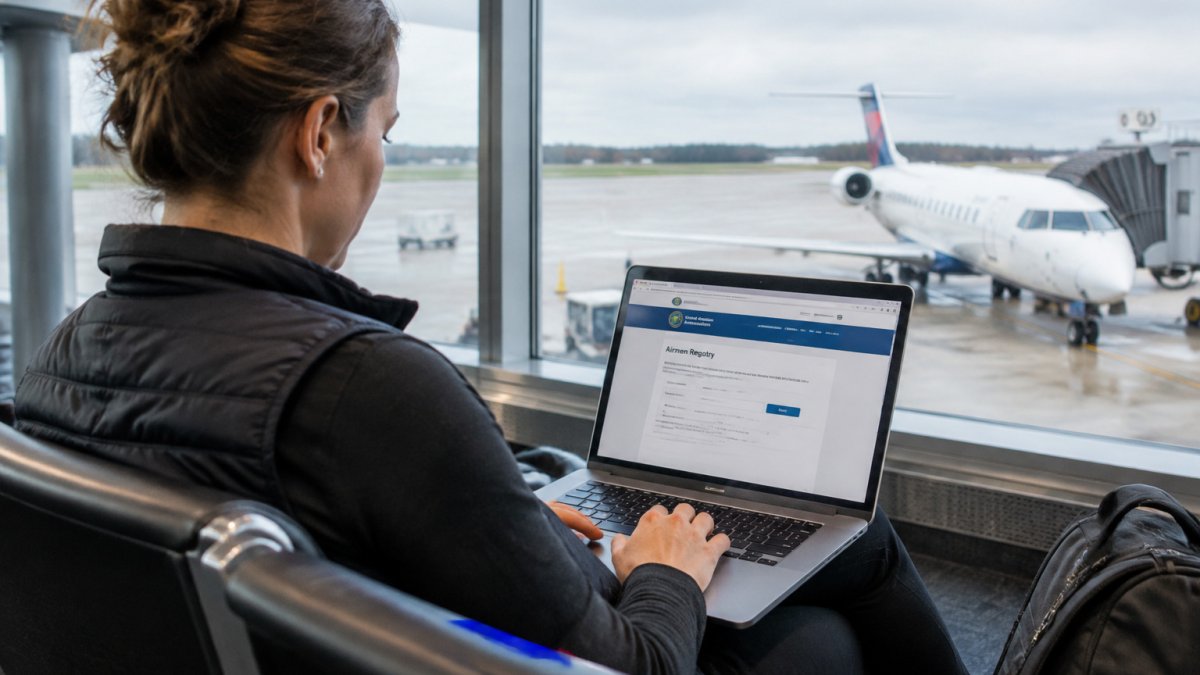
Enter the pilot's last name and, if you have it, their first name or certificate number, since that's the fastest way to verify airline pilot credentials.
We'd suggest bookmarking that page now. You'll probably want it again someday.
What the Registry Shows and What It Doesn't
The Airmen Inquiry is a solid starting point, but it has limits. It shows active certificates and ratings. It does not show a complete career history, and it won't tell you how many hours a pilot has logged. Think of it as confirming the license is real, not as a full résumé.
Step 2: Confirm Certificate Type and Validity
Once you find a match, check three things:
- Certificate type: Student, private, commercial, or airline transport pilot (ATP)
- Ratings: Such as instrument, multi-engine, or type ratings for specific aircraft
- Status: Whether the certificate is currently valid
A student pilot certificate is a very different thing from an ATP. Student pilots are still learning and can't carry passengers for hire. If someone claims to be a commercial pilot but the registry shows only a student certificate, that's a red flag worth asking about.
Plain English note: a "type rating" means the pilot is trained and approved for a specific aircraft model, like a particular Boeing or Airbus. Airline pilots usually need one for each jet they fly.
Step 3: Understand the Pilot Records Database
The FAA also maintains the Pilot Records Database (PRD). This system is designed for airlines and employers to share training and qualification records for pilots they hire or evaluate. It's not a public search tool like the Airmen Inquiry.
If you're an employer, the PRD is where the detailed history lives, but access is restricted to authorized parties. Passengers generally can't search it directly.
Step 4: Request an FAA Verification Letter
Sometimes the online tools aren't enough, especially for employment screening or a formal due-diligence file. In that case, you can request a formal verification from the FAA. The process involves a written request and documentation showing you have a legitimate reason to need the record. Because processing timelines shift, check the FAA's current guidance on its website before you submit anything and build extra time into your hiring timeline.
Verifying a Private Charter Pilot vs. an Airline Passenger
This is where most guides wave their hands, so let's be specific. If you're a passenger on a scheduled airline, you don't need to verify anything yourself, the airline's hiring, training, and recurrent check program already did it, and that's the layer of protection you're paying for.
Private and charter flying is different. When you book a private charter, the due diligence is on you or the operator you hired. That means:
- Ask the operator for the pilot's certificate number and run it through the FAA Airmen Inquiry yourself
- Request the pilot's total time and time in type for the specific aircraft you're flying
- Ask for the last proficiency check date and who conducted it
A charter operator who gets squirrelly about any of this is telling you something. The good ones hand it over before you finish the question.
Verifying International Pilots (Non-FAA Licenses)
Here's the gap almost every US-centric guide skips: what if the pilot holds a license from another country? The FAA registry won't help you. Instead, you verify through the issuing authority:
- EASA (Europe): Licenses are issued by national aviation authorities under EASA rules, for example, the UK CAA, Germany's LBA, or France's DGAC. Each authority has its own license verification process, and many offer a verification service for employers.
- ICAO member states: Most countries issue licenses under ICAO standards, and the issuing civil aviation authority is the body to contact. Some publish online verification portals; others require a written request.
- Foreign license validation for US operations: A pilot flying a US-registered aircraft commercially generally needs FAA-issued certificates or specific validation, so if the paperwork story doesn't add up, ask which authority issued what.
If you're hiring internationally, the practical move is to request a verification letter directly from the issuing civil aviation authority, not from the pilot. The pilot can't verify themselves, that's the whole point.
Digital Verification Tools and What to Request Directly
Third-party aviation background check services exist for employers, and they typically pull from the same official sources plus employment and training records.
Watch out: a verification letter confirms a certificate exists and is valid, it does not confirm the pilot is current, proficient, or a good fit for your specific mission. Pair it with the logbook and reference checks above.
Step 5: Check Flight Hours and Experience Online
Here's the honest part: no public database hands you a pilot's total flight hours. The FAA Airmen Inquiry confirms the certificate is real, but it does not publish a running tally of hours flown. Anyone who tells you otherwise has not actually tried it. So verifying experience means knowing what documents to ask for and how to read them.
What a Logbook Actually Shows
Every pilot keeps a logbook, paper or digital, recording each flight: date, aircraft type, departure and destination, and time logged. For a private charter or a corporate gig, asking for a logbook excerpt is completely normal. A professional pilot expects it. What you're looking for:
- Total time, broken into PIC (pilot in command) and SIC (second in command) time
- Time in type, hours in the specific aircraft model, not just any airplane
- Recent experience, hours in the last 90 days, not just a career total from a decade ago
- Instrument and night time, if the mission requires it
A pilot with 8,000 total hours but 12 hours in the last year is a different risk profile than one with 2,000 hours flown steadily. Total time alone is a vanity metric; recency is what matters operationally.
Check Rides and Proficiency Checks
Airlines and charter operators run regular check rides, formal evaluations with an examiner or FAA-designated pilot examiner where a pilot demonstrates maneuvers, emergency procedures, and systems knowledge. For airline crews, these happen on a recurring schedule tied to the operator's FAA-approved training program. If you're hiring, ask when the pilot's last proficiency check or recurrent training was and who conducted it.
References and Employer Verification
For private charter clients, the strongest move is boring and effective: ask the operator for the pilot's recent employment history and call the previous chief pilot. Most practitioners find that a five-minute conversation with a former employer tells you more than any online profile.
Watch out: self-reported hours on a LinkedIn profile or a charter website bio are marketing copy, not verification. Treat them as claims to check, not facts.
Matching Claims to Certificate Type
Use the certificate as a sanity check on the story. A pilot claiming airline-level experience should hold an ATP certificate or be actively working toward one under an airline's training program.
If you want more behind-the-scenes context on how crews actually get evaluated day to day, that's the kind of thing we dig into on Cabin Pressure with Shawn & G, the check ride stories alone are worth the listen.
Here is what each document or check can tell you when you're verifying a pilot's experience.
| Document or check | What it shows | Key limit |
|---|---|---|
| FAA Airmen Inquiry | Certificate type, ratings, and status | Does not show total flight hours |
| Logbook excerpt | Total time, time in type, recent experience | Self-maintained by the pilot |
| Proficiency check record | Date and who conducted the last check | Ask for the operator and date |
| Previous chief pilot reference | Aircraft flown and mission profile | Requires a direct phone call |
| LinkedIn or website bio | Self-reported hours and history | Marketing copy, not verification |
Common Mistakes When Checking Pilot Credentials
These are the errors we see most often:
- Searching only by first name and getting too many results to sort through
- Confusing a student certificate with a commercial one
- Assuming a certificate means recent experience, since a pilot can hold one without flying much lately
- Trusting a profile screenshot instead of checking the official registry
Watch out: a name match in the registry is not the same as identity verification. Confirm the person in front of you matches the record, ideally with a photo ID.
Your Next Move: Checking the Pilot Flying Your Flight
Next time you board, you probably won't check the pilot's certificate. Most of us don't, and the system has layers of its own checks.
Have you ever looked up a pilot's credentials, or wondered about it while sitting in seat 14C? Tell us in the comments. We'd love to hear your stories from the cabin side or the cockpit side.
Frequently Asked Questions
How do I verify if someone is a pilot?
Start with the FAA Airmen Inquiry, the public search tool for certificated pilots in the United States. Enter a name or certificate number and you can see the certificate type, ratings, and whether the certificate is listed as active. Keep your expectations realistic, though. The registry confirms that a certificate exists and what it covers. It does not show a full flying history or tell you how many hours someone has logged. For that level of detail, the airline itself or a formal verification request is the better route.
Can you verify an airline pilot's flight hours online?
Not usually through a public search. Flight hours are part of a pilot's personal records, and the public FAA Airmen Inquiry does not display them. Airlines and authorized parties can access more detailed experience records through the Pilot Records Database, but that access is restricted. As a passenger, you will not be able to pull a pilot's logbook totals online. If you have a specific concern, the airline's public affairs or safety office is the right place to ask.
What is the Pilot Records Database, and who can access it?
The Pilot Records Database, often called PRD, is an FAA-mandated system where airlines and operators share a pilot's training, qualification, and employment history when a pilot changes employers. Access is limited to authorized users, such as air carriers and the pilot's own records. Members of the public cannot search it. If you are an employer or work for a carrier, you can use it for hiring checks. If you are a passenger, rely on the public registry and your airline's official channels instead.
How do I request an FAA pilot verification letter?
Verification letters are typically requested through the FAA or through the airline or employer that needs the confirmation. The request usually requires the pilot's consent and identifying details such as the certificate number. Processing times vary, so build in extra time if you are working against a hiring or contract deadline. Official FAA procedures can change, so check the current instructions on faa.gov before you submit anything.