 How-to
How to Verify Pilot Flight Experience
Last Updated: October 26, 2026
Quick Summary
To verify pilot flight experience, review their FAA certificate for valid ratings, check logbook entries for total flight hours and recent flying activity, confirm currency through flight review dates and recent landings, and cross-reference aircraft types with their claimed experience. For employers, independent corroboration through airline records and training documentation provides the most authoritative verification.
- A pilot logbook records flight hours, aircraft types, dates, and instructor sign-offs, serving as the primary document for verifying experience.
- Red flags include inconsistent handwriting, impossible flight hours, missing instructor signatures, and gaps in dates that suggest padding or dishonesty.
- Pilots must complete a flight review every 24 calendar months and log at least three takeoffs and landings in 90 days to remain current.
- The FAA Airman Certification Branch confirms certificate status and ratings, but logbooks and recent entries are needed to verify active flying.
- Passengers cannot access medical records, training files, or personnel records, but employers can verify experience through logbooks, airline crew records, and FAA enforcement actions.
Table of Contents
- Why Verifying Pilot Flight Experience Actually Matters
- Understanding Pilot Logbook Verification
- Checking the FAA Pilot Records Database
- How to Access Pilot Flight Hours Records
- Verifying Pilot Certificate and Ratings Verification
- Your Verification Checklist
- What You Can and Can't Find Out About Your Pilot
- Frequently Asked Questions
Why Verifying Pilot Flight Experience Actually Matters
You're about to board a flight. The captain's been flying for 30 years, or so the airline says. What if you could actually verify pilot flight experience yourself instead of trusting the uniform and the confident voice on the intercom?
Most passengers never think about this. Frequent flyers might wonder. Aviation enthusiasts definitely do. And if you're hiring pilots or working in aviation safety, verifying pilot flight experience isn't curiosity, it's your job.
At Cabin Pressure with Shawn & G, we've spent decades around pilots, nearly 89,000 hours in the air between us. Listen to real pilot stories and experiences directly from our community on YouTube. The truth? You can verify this stuff. It's not as simple as asking, but it's doable.
Whether you're a passenger with trust issues, a hiring manager vetting credentials, or just curious how airlines check their pilots, here's how it works.
Understanding Pilot Logbook Verification
A pilot logbook is the flight attendant's equivalent of a captain's log. It's a record of a pilot's flights, aircraft types, and ratings or endorsements.
What a pilot logbook actually contains
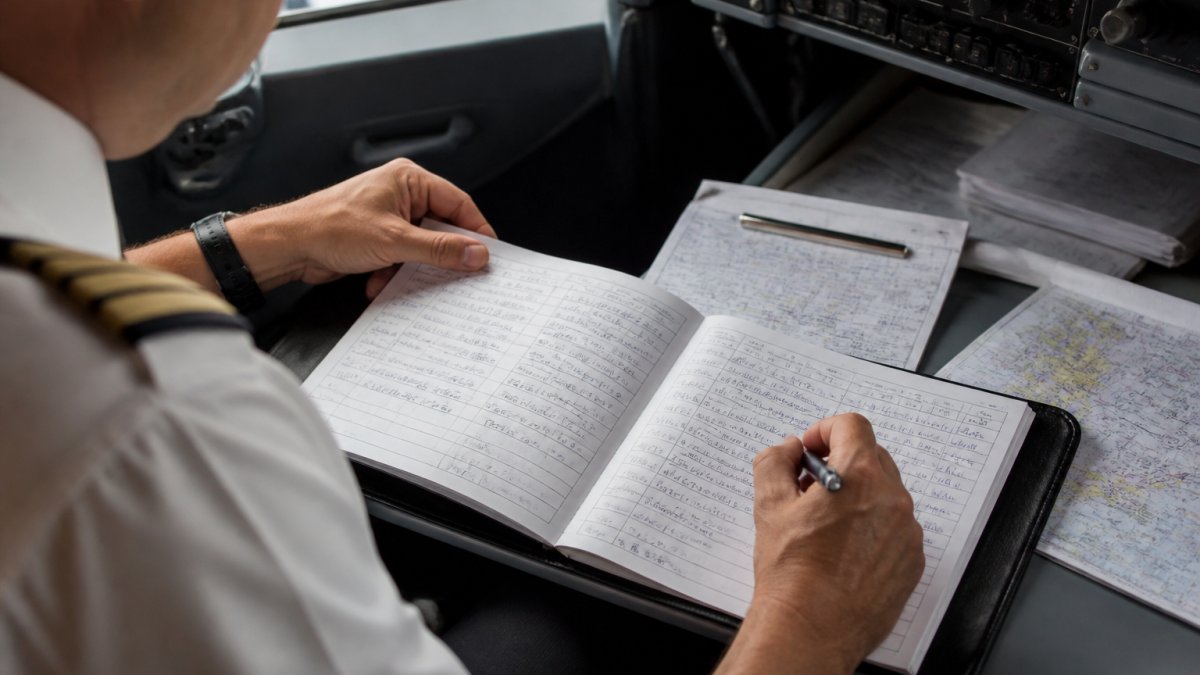
Think of it as a resume written in flight hours. Each entry includes the date, aircraft type, departure and arrival airports, flight time, and the kind of flying it was, cross-country, night, instrument approaches. Training entries get signed off by an authorized instructor or the pilot-in-command.
The logbook also tracks:
- Total flight hours (the big number everyone cares about)
- Hours in specific aircraft types
- Cross-country flight time
- Night flying hours
- Instrument flight hours
- Pilot-in-command time versus second-in-command time
- Recent flight review dates
- Medical certificate currency
It's detailed, and it's one of the first places discrepancies show up.
Red flags in logbook entries
Here's what we look for when something feels off: inconsistent handwriting, entries that don't match aircraft maintenance logs, gaps in dates that don't make sense, or a pilot claiming 200 hours in a month when that's physically impossible.
Some red flags are honest mistakes, like a forgotten flight or a misremembered date. Others suggest padding. Look for:
- Entries with no instructor signature when they should have one
- Flight times that seem unrealistic for the route
- Missing entries for known training flights
- Inconsistent formatting or pen color suggesting later additions
- Hours that don't add up when you do the math
Checking the FAA Pilot Records Database
For employers and official operations, the process goes through the FAA's Airman Certification Branch, which confirms certificate status, ratings, and endorsements. Not instant, but authoritative.
How to Access Pilot Flight Hours Records
Getting actual flight-hour data is trickier than it sounds, and most guides wave their hands and say 'check the logbook.' Thanks, Captain Obvious.
Here's what actually happens in practice, broken down by who you are.
**
Verifying Pilot Certificate and Ratings Verification
A pilot's certificate is their license to fly. It says they passed the tests, logged the required hours, and demonstrated competency. But certificates come with ratings, specific aircraft types or conditions they're authorized for.
Understanding pilot ratings and endorsements
A private pilot certificate is entry-level: they can fly, but not for money and with restrictions. A commercial rating means they can be paid to fly. An airline transport pilot (ATP) rating is what you need to captain a commercial airline.
Then there are ratings within ratings. An instrument rating means they can fly in clouds on instruments. A multi-engine rating covers aircraft with more than one engine. Type ratings are aircraft-specific, you need one to fly a Boeing 737 or an Airbus A320.
Endorsements are smaller credentials. A tailwheel endorsement covers older aircraft with a tail wheel instead of a nose wheel. A pilot-in-command endorsement means an instructor signed off that they're ready to fly solo.
To verify these, look at the actual certificate. It's a card listing every rating and endorsement. If someone claims a 737 type rating but their certificate doesn't show it, that's a problem.
Checking currency and recency
Here's something most people don't realize: a pilot can have a valid certificate and still not be current. Currency means they've flown recently enough to stay sharp.
The FAA has specific rules. A pilot needs a flight review, basically a check ride with an instructor, every 24 calendar months, plus at least three takeoffs and landings in the last 90 days to carry passengers. Four months on vacation means they're not current, even with a valid certificate.
That's where recent logbook entries matter. You're looking for proof they've actually been flying, not just holding a certificate on paper.
Your Verification Checklist
Most guides give you a vague list that amounts to 'look at the logbook and hope.' We'll do better. This checklist separates official qualification checks from corroborating evidence checks, because mixing them up is how people get fooled. It also tells you which steps apply to employers versus passengers, because a nervous flyer should not be demanding a captain's logbook at the gate.
For employers and operators: the full verification pass
Step 7: Check for discrepancies and ask about them. Honest mistakes happen. Intentional padding is a bigger problem. How the pilot responds to a question about a discrepancy tells you as much as the discrepancy itself.
For passengers: what you can actually do
| Verification Step | What You're Checking | Who It's For | Red Flags to Watch |
|---|---|---|---|
| Certificate review | Valid certificate with claimed ratings | Employers | Missing ratings, expired certificate |
| Logbook totals | Flight hours match claimed experience | Employers | Numbers don't add up, impossible hours |
| Recent entries | Active flying in last 12 months | Employers | No entries for months, gaps in dates |
| Currency check | Flight review and recent landings | Employers | Overdue flight review, no recent landings |
| Aircraft types | Experience in aircraft they'll fly | Employers | No type rating for claimed experience |
| Independent corroboration | Aircraft, dispatch, training, tracking records | Employers | Discrepancies between sources |
| Public records | Airline legitimacy, public safety info | Passengers | N/A, use official sources only |
If you want more of this kind of behind-the-scenes aviation perspective, listen to Cabin Pressure with Shawn & G, watch on YouTube, or explore the site for more on training, standards, and what legitimate pilot experience actually looks like.
What You Can and Can't Find Out About Your Pilot
Here's the reality check: there's a lot you can't access, and that's by design.
You can't get a pilot's medical records, flight school training records, personnel files from previous airlines, or incident reports unless they resulted in certificate action.
What you can get:
- Certificate status and ratings (through the FAA)
- The logbook (if the pilot provides it)
- Airline crew records (if you work for that airline)
- Public FAA enforcement actions (if there were any)
What's protected:
- Medical history
- Personal information beyond what's on the certificate
- Training records from flight schools
- Airline personnel files
- Accident investigation details (usually)
The FAA's rules on pilot records are clear about this. Privacy matters, even in aviation. A pilot's got rights to their own information.
For more insider perspectives on aviation and what really happens behind the scenes, listen to Cabin Pressure with Shawn & G. Watch on YouTube or explore the site to learn more.
Frequently Asked Questions
How can you verify a pilot's flight experience?
You can verify pilot flight experience through several channels: request the pilot's logbook directly (if you have a relationship that allows it), check the FAA Pilot Records Database for certified data, confirm their certificate and ratings through official FAA channels, and ask the airline directly about their hiring and verification process. Airlines conduct thorough background checks and logbook audits before hiring, so if someone is flying commercially, their experience has already been verified by regulatory authorities.
What is the FAA Pilot Records Database and how do I use it?
The FAA Pilot Records Database is an official system where you can verify a pilot's certificate, ratings, and medical certification status. You'll need the pilot's full name and date of birth to search. However, access is limited, the database shows current certification status but not detailed flight hours or logbook entries. Airlines and employers have more detailed access through formal channels. It's a good starting point for basic credential verification.
What should you look for when reviewing a pilot's logbook?
Look for consistent, legible entries with dates, aircraft types, flight times, and instructor signatures where required. Red flags include missing pages, entries in different handwriting, inconsistent formatting, or times that don't add up. Check that cross-country flights, night flying, and instrument hours match the pilot's stated ratings. Gaps in flying history might indicate currency issues. Most importantly, verify that entries are signed off by authorized instructors or examiners when required by regulations.
Can you find out who is piloting your flight before you board?
Most airlines don't publicly list pilot names before boarding for privacy and security reasons. You won't typically find this information on your booking confirmation or online. Once onboard, the captain may introduce themselves over the intercom. If you have a specific concern about a flight, contact the airline directly, they can discuss crew qualifications without violating privacy policies. Knowing that commercial pilots are extensively trained and regularly checked gives you solid reassurance.
The next time you're curious about your pilot's background, you've got options. You can't always get every detail, but you can verify the important stuff. And honestly, most pilots are exactly what they claim to be. It's the rare exception that makes the verification process necessary.